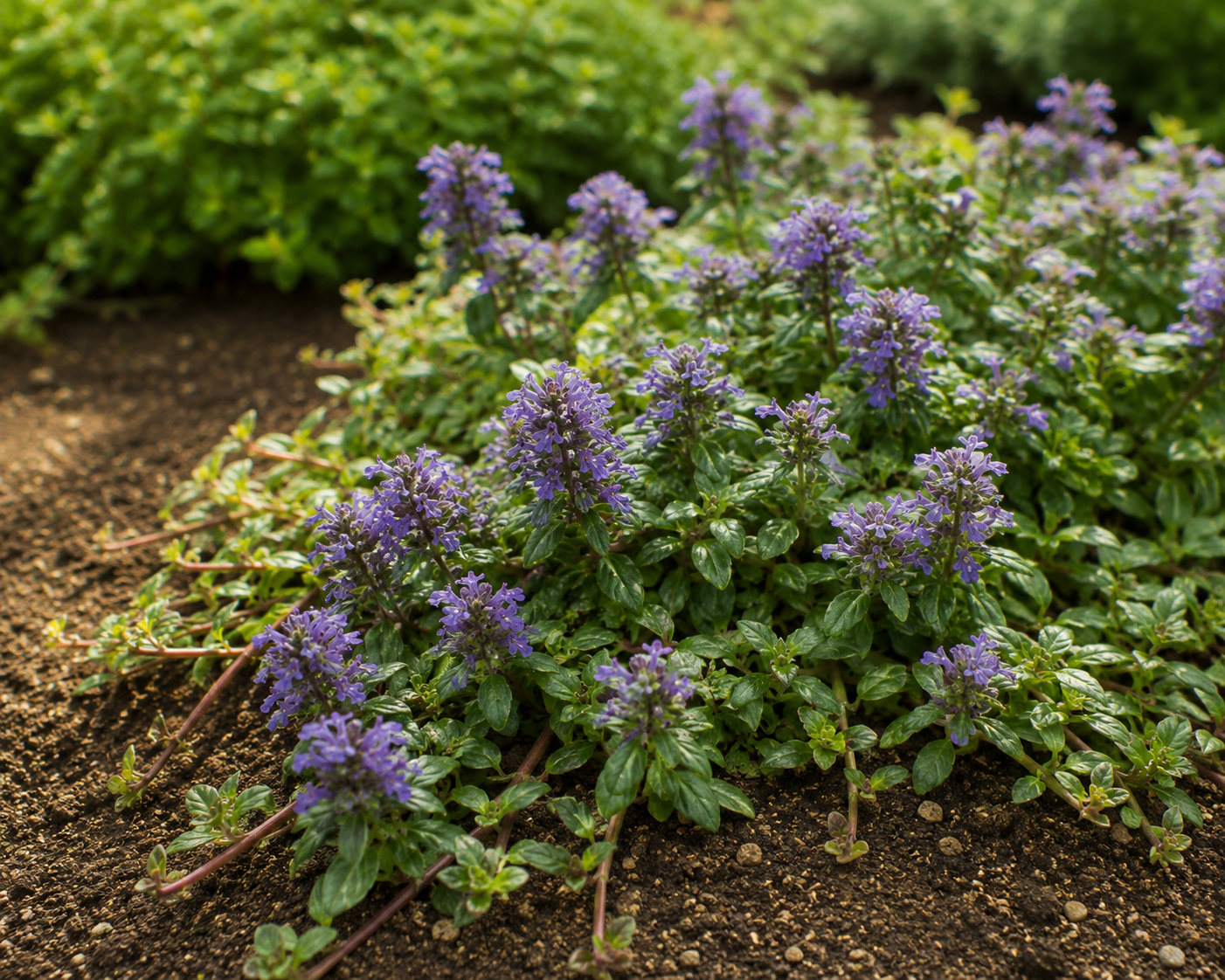
Ajuga decumbens (Lamiaceae) is a perennial herb that grows across the temperate zones of Taiwan, China and Japan. Taiwanese traditional medicine uses the whole plant — particularly the aerial parts — for joint stiffness, swelling and muscle tightness. Modern pharmacology has confirmed its anti-inflammatory activity, and its value as a functional-food raw material is being reassessed.
01Botanical background
Ajuga decumbens grows wild between 200 and 1,500 m of elevation, on mountain slopes, forest edges and field margins. In Taiwan, the Central Range and the eastern mountains are the main provenances. Cultivation is advancing but wild collection still dominates supply, and supply stability is one of the chain's open issues.
02Active compounds
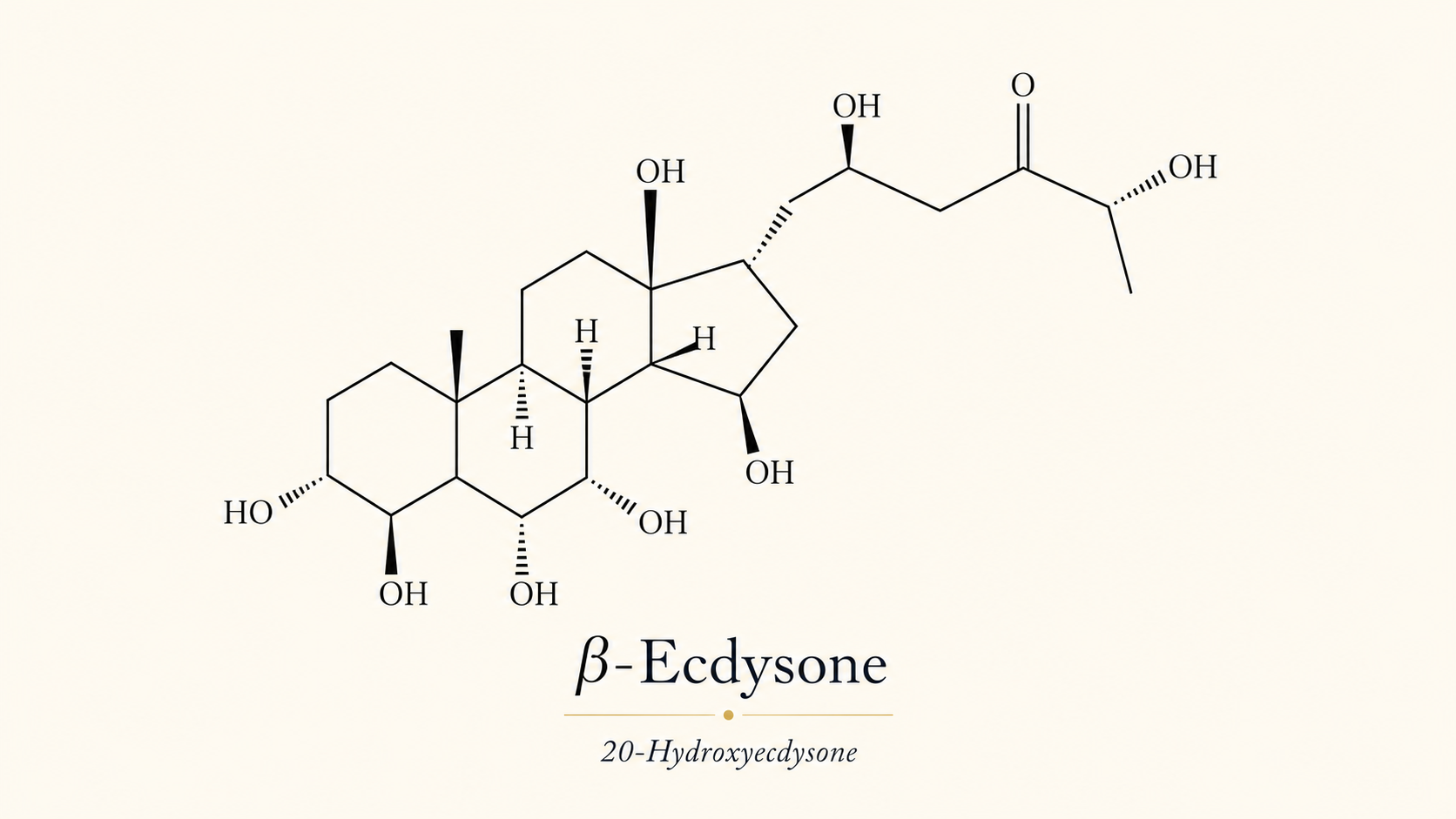
Four families of actives: (1) Ecdysteroids (β-ecdysone, ajugasterone C…), (2) Iridoid glycosides (ajugol, ajugoside), (3) Diterpenes (ajugarin series), (4) Flavonoids. Ecdysteroids attract the most interest, linked to muscle protein synthesis and anti-inflammatory action.
03Pharmacological mechanism
(a) NF-κB pathway suppression → pro-inflammatory cytokines (TNF-α, IL-6) drop; (b) COX-2 inhibition → less PGE2 → pain easing; (c) cartilage protection → MMP-13 inhibition → slower type-II collagen breakdown. Three mechanisms running in concert across arthritis models.
04Clinical evidence
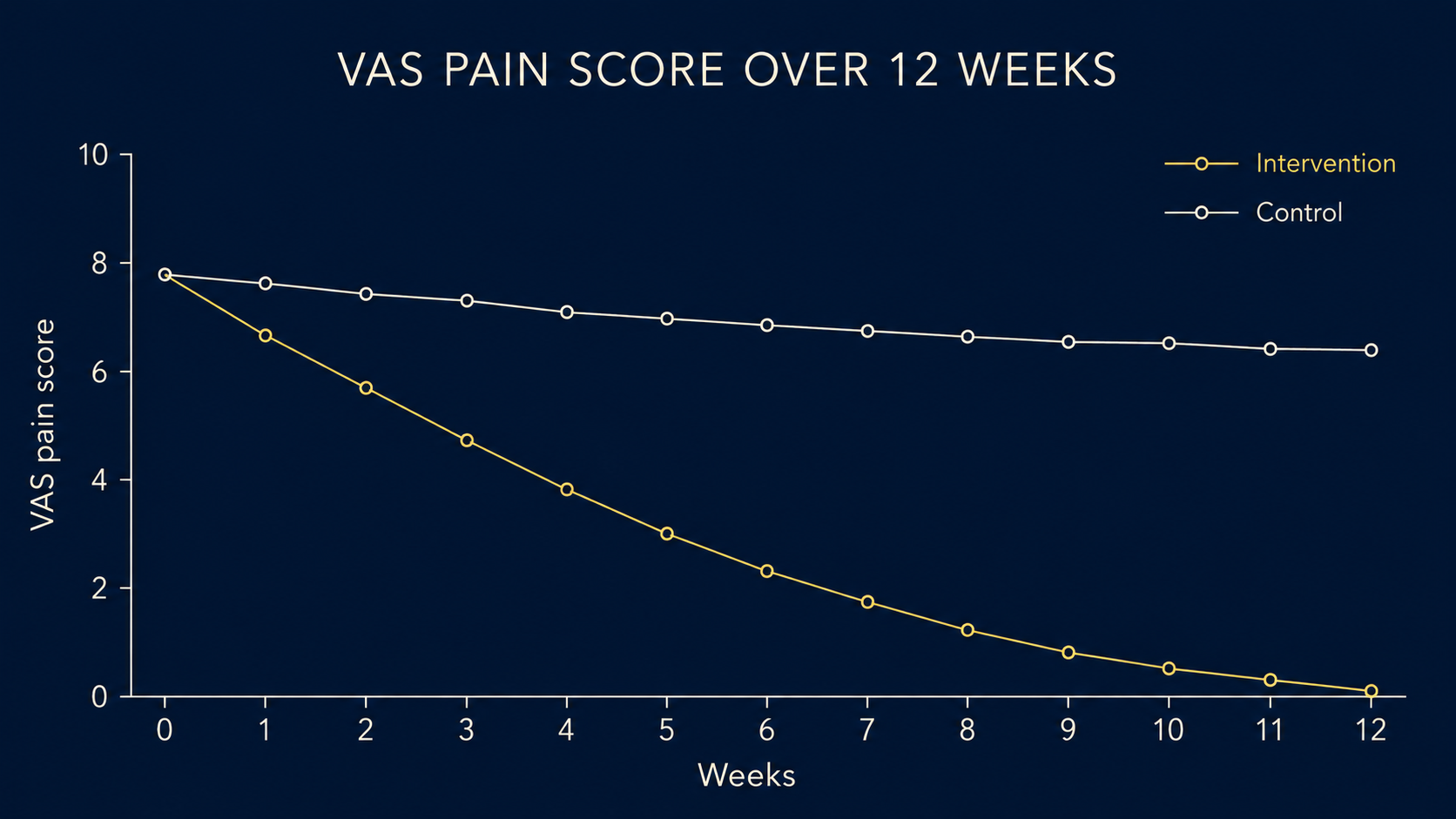
Animal models — collagen-induced arthritis, MIA-induced osteoarthritis — show clear effects. Human RCTs are still few. The most cited published trial: N=80 double-blind 12-week trial in mild knee discomfort, with significant VAS pain reduction and WOMAC functional improvement. Trial scale needs further work.
05Specifications & markers
Our standard specification: β-ecdysone ≥ 1.5%, moisture < 5%, heavy metals (Pb) < 1ppm, microbial count < 1,000 CFU/g, pesticide residues ND (66 items). Double check by HPLC quantification of the marker compound and LC-MS/MS confirmation.
Recommended dose: 100 mg/day (≈1.5 mg/day β-ecdysone). Tablet, capsule, functional drink and patch — all viable formats.
06Path to Japan-market application
Under Japan's drug/food classification notice, the whole plant is food-distributable. In recent years it's drawn attention as a differentiator for "walking and knee support" functional foods. Through the Foods with Function Claims (FFC) regime, claims like "helps maintain knee-joint health" and "supports smooth walking" become possible. Taiwanese tradition × Japanese science × FFC regime — a strong combination for small-and-mid brands looking for a wedge.
"The marker is there. Safety is there. Function is there. What's left is telling the story well." Ajuga decumbens has the foundations of a brand-grade material.— MZ Pharma R&D
We sample-supply Ajuga decumbens extract and support FFC registration end-to-end. → Contact us